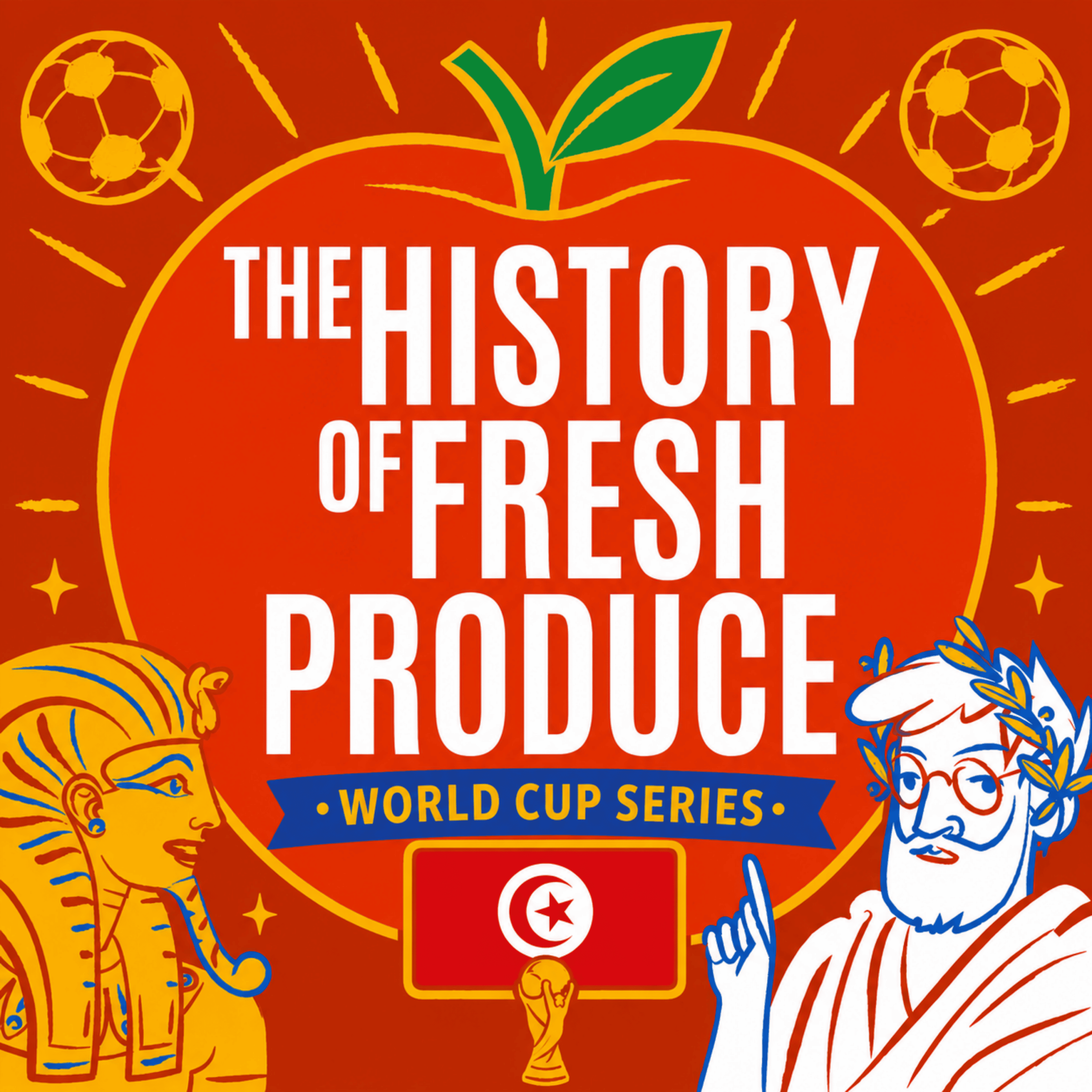
Why does a town of 20,000 people in central Tunisia contain the third largest Roman amphitheatre ever built – and what does a structure that seated 35,000 people tell us about what olive oil money could buy? How did a Phoenician agricultural manual become the only document the Roman Senate preserved when they burned Carthage to the ground? And why do archaeologists now believe Tunisia was not just the breadbasket of Rome, but its main oil supplier too?
Join John and Patrick as they tell the story of Tunisia and the olive – the Carthaginian farmers, the 2,500-year-old tree still bearing fruit in Cap Bon, and two and a half thousand years of unbroken continuity in an arid landscape that has outlasted every empire that ever claimed it…
———-
In Sponsorship with Cornell University: Dyson Cornell SC Johnson College of Business
———–
Join the History of Fresh Produce Club for ad-free listening, bonus episodes, book discounts and access to an exclusive chatroom community.
Support us!
- Share this episode with your friends
- Give a 5-star rating
- Write a review
———–
Subscribe to our biweekly newsletter here for extra stories related to recent episodes, book recommendations, a sneak peek of upcoming episodes and more.
———–
Instagram, TikTok, Threads:
@historyoffreshproduce